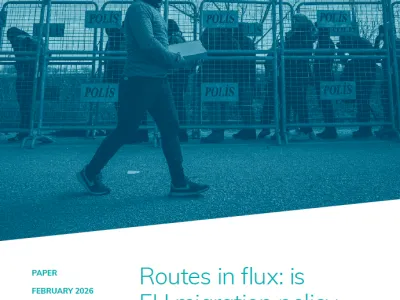
Your contacts
Image
![[DE Copy] jassin_irscheid_01.jpg](/sites/default/files/styles/bosch_square_medium/public/images/media/2026-06/jassin_irscheid_01.jpg.webp?h=1b222ed7&itok=A9pMbhK5)
Jassin Irscheid
Projektmanager
this project
Jassin Irscheid
Projektmanager
this project
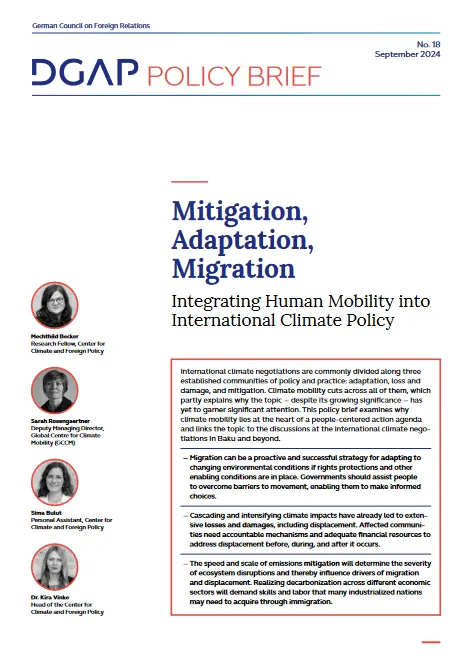
As international climate negotiations unfold, the conversation often focuses on three key areas: adaptation, loss and damage, and mitigation. However, one critical issue remains underexplored - climate mobility. This policy brief examines why climate mobility is essential to a people-centered action agenda and its relevance to discussions at the UNFCCC. It demonstrates how migration can serve as a proactive strategy to adapt to environmental change, provided that rights protections and enabling conditions are in place. The paper discusses why governments must facilitate movement and empower individuals to make informed choices, and the urgent need for accountable mechanisms and financial resources to support communities facing displacement due to escalating climate impacts. Finally, it considers the pace of emissions reductions and how this will affect ecosystem stability and influence migration drivers, highlighting the need for skilled labor through migration in the transition to a decarbonized economy.
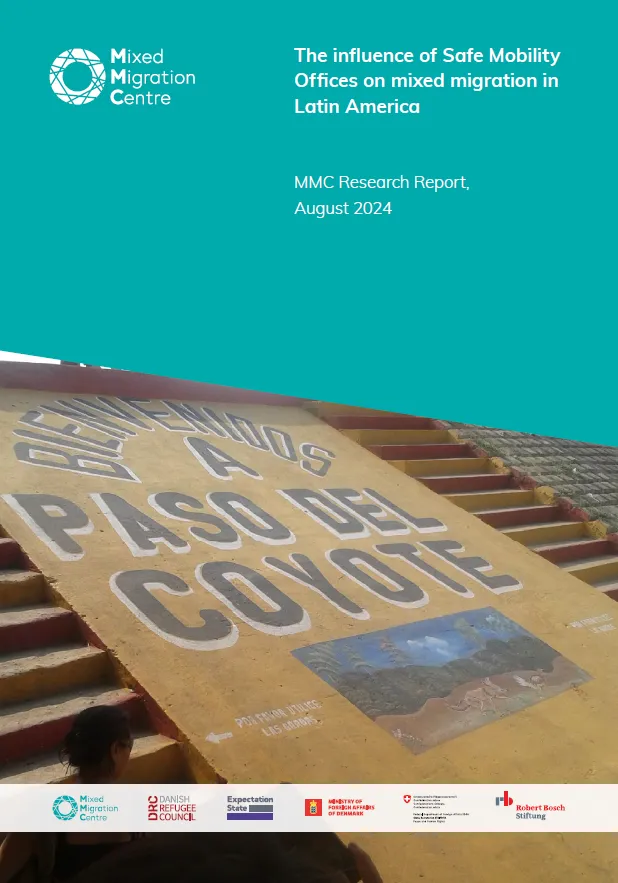
The Safe Mobility Offices (SMOs), established by the United States in Latin America, represent an innovative approach to addressing the challenges of irregular migration. Launched in April 2023, these offices aim to provide safer alternatives for vulnerable migrants and demonstrate the potential of political will and international cooperation. Since their inception, SMOs have facilitated the resettlement of 9,000 individuals to the US, with a further 11,000 approved for resettlement. This study examines the objectives and functioning of SMOs, their influence on migration decisions, and the lessons that can be learned for managing mixed migration in Europe. While SMOs offer a promising model, addressing their limitations is crucial to fully realize their potential to provide safe alternatives for migrants.
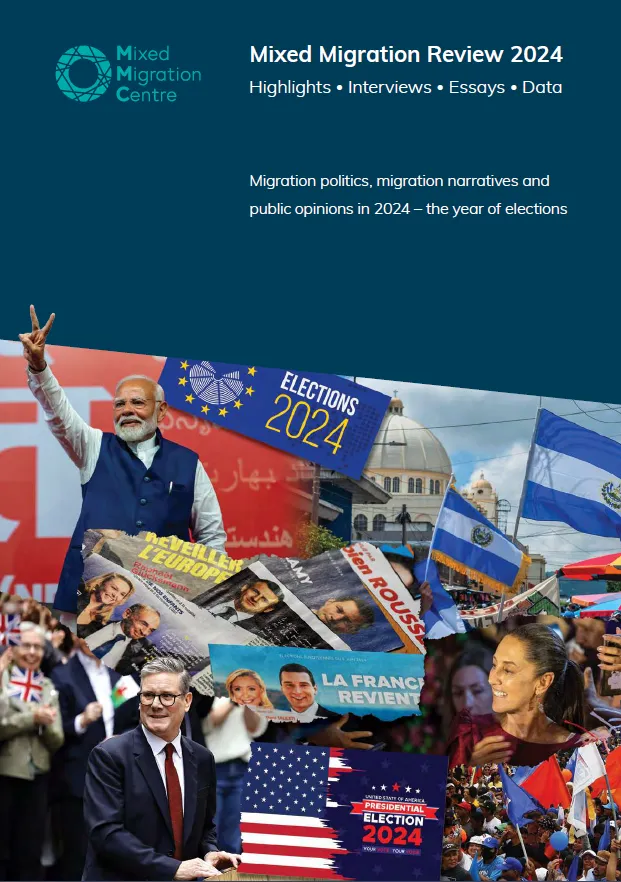
The Mixed Migration Review (MMR) is the Mixed Migration Center's flagship annual report, first published in 2018. This year's Mixed Migration Review delves into the complex interplay between politics and migration, highlighting how nearly half of the world's population in over 80 countries faced migration-related issues during the 2024 elections. The Review features essays on the instrumentalization of migration for political agendas, the rise of populism, and the influence of modern media on public opinion, as well as unique regional perspectives from young authors and a look at how authorities are responding to mixed migration.
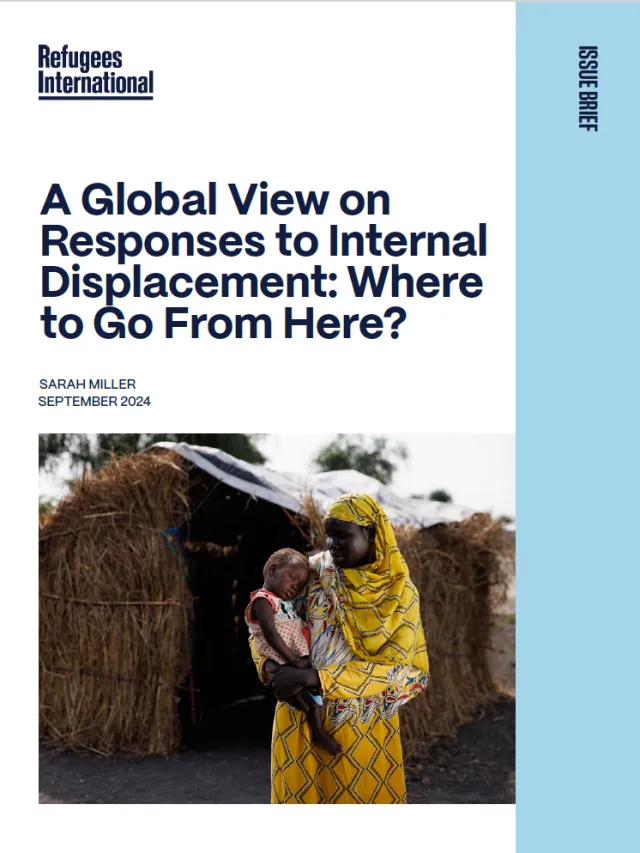
In this publication, Sarah Miller from Refugees International provides a comprehensive analysis of the global response to internal displacement. She illuminates the challenges faced by aid and development actors in addressing the needs of internally displaced people (IDPs). The report offers a critical examination of the shortcomings in the humanitarian landscape and presents a forward-looking agenda for improving the response to IDP situations, drawing on extensive research and case studies.

Digital identity wallets are an emerging innovation in digital identification, but they are still in the pilot phase. Like all technologies, these wallets are shaped by political decisions. In 2021, the EU Commission proposed the European Digital Identity (EUDI) wallet scheme, which has the potential to set global standards. Our partners at Caribou Digital, the University of Virginia, and Queen Mary University reviewed the EUDI, looking at accessibility, inclusivity, and risk mitigation, particularly around surveillance, privacy, and data protection. Their recommendations address the need for policymakers to be responsive to rights advocates and civil society.
![[DE Copy] DeZIM_Forschungsbericht_600x800.png](/sites/default/files/styles/bosch_original_medium/public/images/media/2024-09/DeZIM_Forschungsbericht_600x800.png.webp?itok=5LeMK2uV)
The coronavirus pandemic was followed by Russia's attack on Ukraine, and since then almost 1.2 million people have arrived in Germany from Ukraine - in addition to those who have migrated via the regular asylum system. At the same time, personnel and financial bottlenecks in local authorities are becoming more apparent: problems such as a lack of housing or insufficient childcare are putting local administrations under pressure. How can municipalities develop resilience in the face of these multiple challenges? Between May 2023 and March 2024, DeZIM explored this question together with 11 municipalities, highlighting best practice and making recommendations for action in the report. (German only)




![[DE Copy] digital_wallets_800x600](/sites/default/files/styles/bosch_4d3_medium/public/images/media/2023-09/20230817_DigitalWallets%2BMigration_grafik_02_800x600px.png.webp?h=c6cbd989&itok=IkiSpDWQ)


![[DE Copy] Data-Move_aapti_800x600](/sites/default/files/styles/bosch_4d3_medium/public/images/media/2023-07/Aapti_Unsplash_S%C3%A9bastien%20Goldberg_800x600.jpg.webp?h=827069f2&itok=5ujPcNND)
![[DE Copy] STaF_teaser 800x600](/sites/default/files/styles/bosch_4d3_medium/public/images/media/2023-07/Projektbild_STaF_%28c%29Unsplash_naassom-azevedo_quer.jpg.webp?h=827069f2&itok=USIttyra)


![[DE Copy] 260502_IDMC_GRID26_web-1.jpg](/sites/default/files/styles/bosch_4d3_medium/public/images/media/2026-05/260502_IDMC_GRID26_web-1.jpg.webp?h=8c302e12&itok=Az0SHZfo)