Image
[DE Copy] DeZIM_Forschungsbericht_600x800.png
Download PDF

Opportunities instead of ‘crisis’

Books and studies

The coronavirus pandemic was followed by Russia's attack on Ukraine, and since then almost 1.2 million people have arrived in Germany from Ukraine - in addition to those who have migrated via the regular asylum system. At the same time, personnel and financial bottlenecks in local authorities are becoming more apparent: problems such as a lack of housing or insufficient childcare are putting local administrations under pressure. How can municipalities develop resilience in the face of these multiple challenges? Between May 2023 and March 2024, DeZIM explored this question together with 11 municipalities, highlighting best practice and making recommendations for action in the report. (German only)

Deutsches Zentrum für Integrations- und Migrationsforschung
Image
Cover MPI Final report
Download PDF

The End of Asylum?

Program brochures

The report sets out a transformative vision for how the international protection system can evolve, with a focus on the future of asylum. The report analyzes promising developments and ideas around facilitating orderly entry, ensuring system efficiency, and building regional capacity. It also examines how these elements could foster a system that is better at providing protection for those who need it while also securing public trust by reducing chaos at borders and ensuring that enforcement and the rule of law remain core elements. It is the concluding report produced under the three-year Beyond Territorial Asylum: Making Protection Work in a Bordered World initiative undertaken by MPI and the Robert Bosch Stiftung. The initiative seeks to explore new ways to facilitate access to protection that better support equity and results in more flexible, sustainable infrastructure.

Migration Policy Institute

Authors

Susan Fratzke, Meghan Benton, Andrew Selee, Emma Dorst, Samuel Davidoff-Gore

Image
Cover Policy Briefing Mig-EN
Download PDF

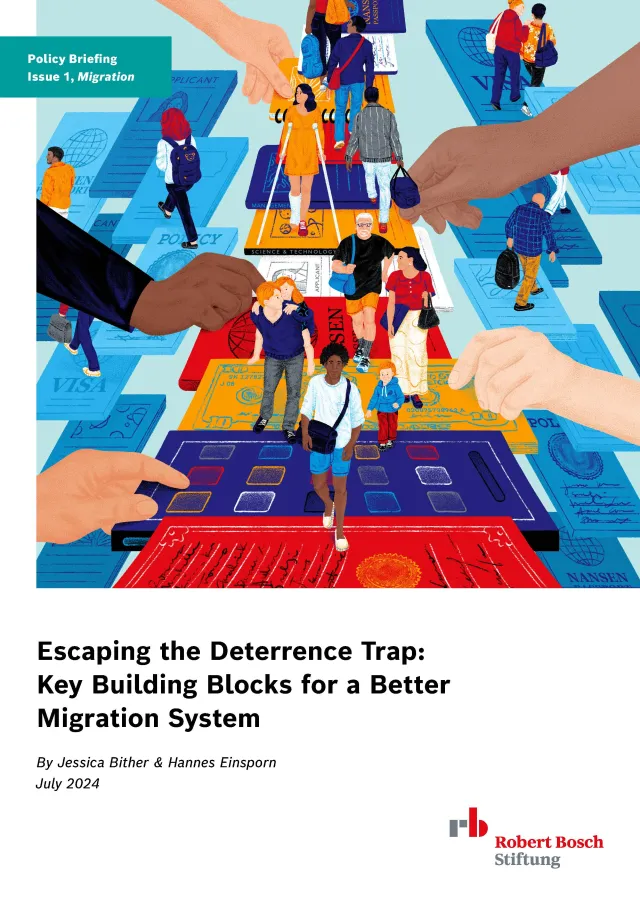
Key Building Blocks for a Better Migration System

Articles

How can policymakers manage migration better? In the first issue of our new Policy Briefing publication series, Jessica Bither and Hannes Einsporn, both experts in the Migration Team at the Robert Bosch Stiftung, show how a combination of different policy measures can respond more quickly and flexibly to the growing challenges in migration policy. The authors argue that restrictive measures alone will not lead to more "control" in migration policy. In fact, they can have the opposite effect.

Robert Bosch Stiftung

Authors

Jessica Bither & Hannes Einsporn

Image
Cover_Forced Mig review
Download PDF

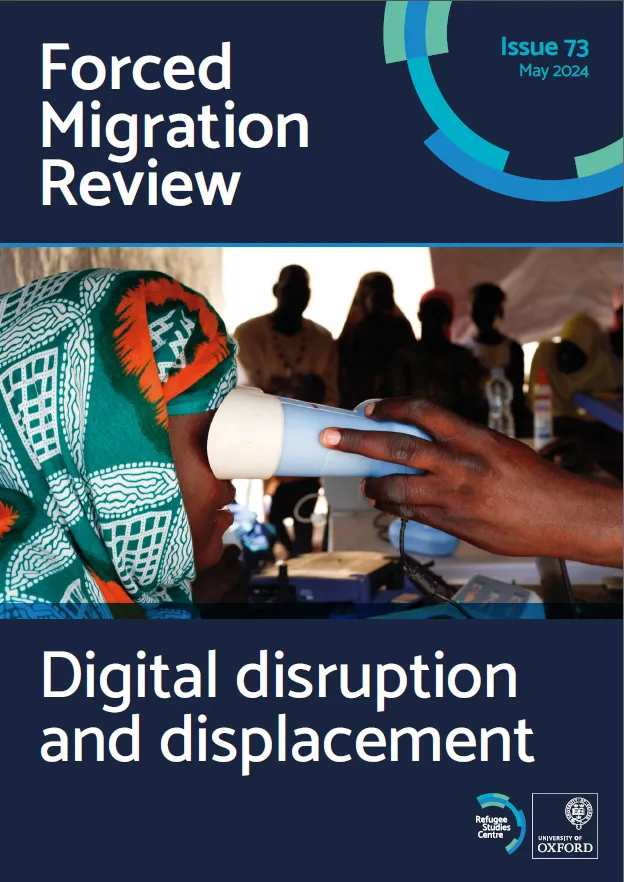
Digital disruption and displacement

Digital technologies are transforming our lives. Forcibly displaced people are using digital technologies in ways that inform and shape their migration and settlement in new places; and there are new opportunities for accessing training and income-generating activities online. At the same time, digital technologies are being used on (or against) forcibly displaced people. Complex predictive modelling, geolocation tracking on mobile phones, biometric data use and dissemination, digital financial systems and the use of artificial intelligence in decision-making are among the digital technologies discussed in this issue. The foreword by Jessica Bither and Jassin Irscheid from the Robert Bosch Stiftung's migration team addresses the decisions made today about digital architecture and their impact on the security, privacy and agency of people on the move. They also raise the question of whether we are meeting this responsibility appropriately.

Refugees Studies Center, University of Oxford

Your contacts

Image
Raphaela_Schweiger_800x800.jpg

Raphaela Schweiger

Teamleiterin

Image
[DE Copy] Karen Jacobsen

Karen Jacobsen

Henry J. Leir Professorship in Global Migration

Tufts University, Fletcher School of Law and Diplomacy

Image
[DE Copy] Carlos Alvarado

Carlos Alvarado Quesada

Professor of Practice

Tufts University, Fletcher School of Law and Diplomacy

this project

Similar Projects

Image
[DE Copy] Scars of war_Ethiopia report
Download PDF

Scars of War and Deprivation

Articles

The conflict in Tigray since November 2020 has resulted in significant loss of life and displacement. Today, Ethiopia hosts 4.38 million IDPs – one of the highest IDP populations in the world. Ongoing issues in the region include human rights violations, food and medicine shortages, sexual violence, and inadequate access to psychosocial support. . The report provides an overview of the key issues facing Ethiopia and the Tigray region and draws specific lessons on systemic shortcomings in the global response to internal displacement. Additionally, it develops recommendations for the United States, the aid community, donors, and development actors, as well as the Ethiopian government and Tigrayan authorities.

Refugees International

Authors

Sarah Miller

Equal Partnerships

Program brochures
2023

Sfax is the second largest city in Tunisia. Located on the Mediterranean coast, the city is an important economic center connecting the north and south of the country. Sfax is home to approximately 615,000 inhabitants, with approximately 950,000 inhabitants living in the wider agglomeration. The city experiences mixed rural-urban, interregional and international migration. The increasingly difficult socio-economic situation, financial constraints, gender dynamics, the absence of a national migration strategy and the politicization of mobility issues between North Africa and Europe have a unique impact on migration dynamics in Sfax. The municipality participates in the international Mediterranean City-to-City Migration network (MC2CM) and aims to address migration issues at the local level. In addition, a wide range of other actors are directly or indirectly involved in migration and displacement. The stakeholder mapping conducted by the Equal Partnership project shows that civil society and international actors have created a referral and coordination system on migration issues. Representatives of national agencies and the municipality sometimes attend these meetings, and the municipality has worked in partnership with migrant associations. However, the local scope for action remains very limited in the absence of local-national dialogues.

Authors

Hervé Nicolle, Daniel Provost

Equal Partnerships

Program brochures
2023

With a population of approximately 300,000, the Senegalese city of Saint serves as a point of arrival, transit, residence, destination, and return for a wide range of mobile populations. While Saint Louis' strategic location on the Atlantic coast attracts migrants seeking socio-economic opportunities, climate-related stressors and inadequate access to housing and social services challenge integration and local responses to migration. To gain an overview of activities, partnerships and cooperation gaps, the Equal Partnerships project developed participatory field research with the city of Saint Louis in February and March 2023 and facilitated a local workshop. The stakeholder mapping shows that a wide range of local, national and international actors are addressing migration and displacement in Saint Louis, with cooperation focused mainly on local climate-driven displacement and child protection. Significant gaps in collaboration remain on international migration issues.

Authors

Daniel Provost, Pauline Cherunya